
Delaware City Directory Collections
Delaware has a strong local sequence of historic city directories, with digitized volumes in the Delaware County Historical Society collection on Ohio Memory. The sequence begins with Williams' 1859-60 issue and reaches the 1922 Gardner H. Townsley volume. It is not a complete annual run, so each book needs its own date and page citation. The Delaware County District Library and Delaware County Historical Society provide the companion shelves for directories, maps, newspapers, local census resources, yearbooks, and other material that can test a directory lead.
| Collection | Years | Where | Access |
|---|---|---|---|
| Williams' Delaware directory | 1859-60 | Ohio Memory, DCHS collection | Online item scan |
| Hellrigle directory | 1880-81 | Ohio Memory, DCHS collection | Online item scan |
| Polk, Wiggins', Danford & McCuskey, and Baker's volumes | 1893-94, 1899, 1901, 1905-06, 1908-09 | Ohio Memory, DCHS collection | Online item scans |
| Gardner H. Townsley directory | 1922 | Ohio Memory, DCHS collection | Online item scan |
The local collections also hold material beyond the digitized run. Ask for a named volume and date rather than assuming a gap means the household was absent. County taxpayer and residence sections appear in several books, but they must be kept separate from pages expressly labeled for the City of Delaware.
Delaware Historic Directory Records
The Ohio Memory Delaware County Historical Society collection is the direct online route for the digitized volumes. Collection browsing is useful for discovery, but an historical statement needs the item, volume date, page, and the original wording. The 1859-60 Williams' volume is identified as the first issue. Later books split material into city, county, classified, guide, taxpayer, and street sections, so the section label matters as much as the surname.
The Ohio Memory collection view makes the scale of the local shelf clear before a search begins.
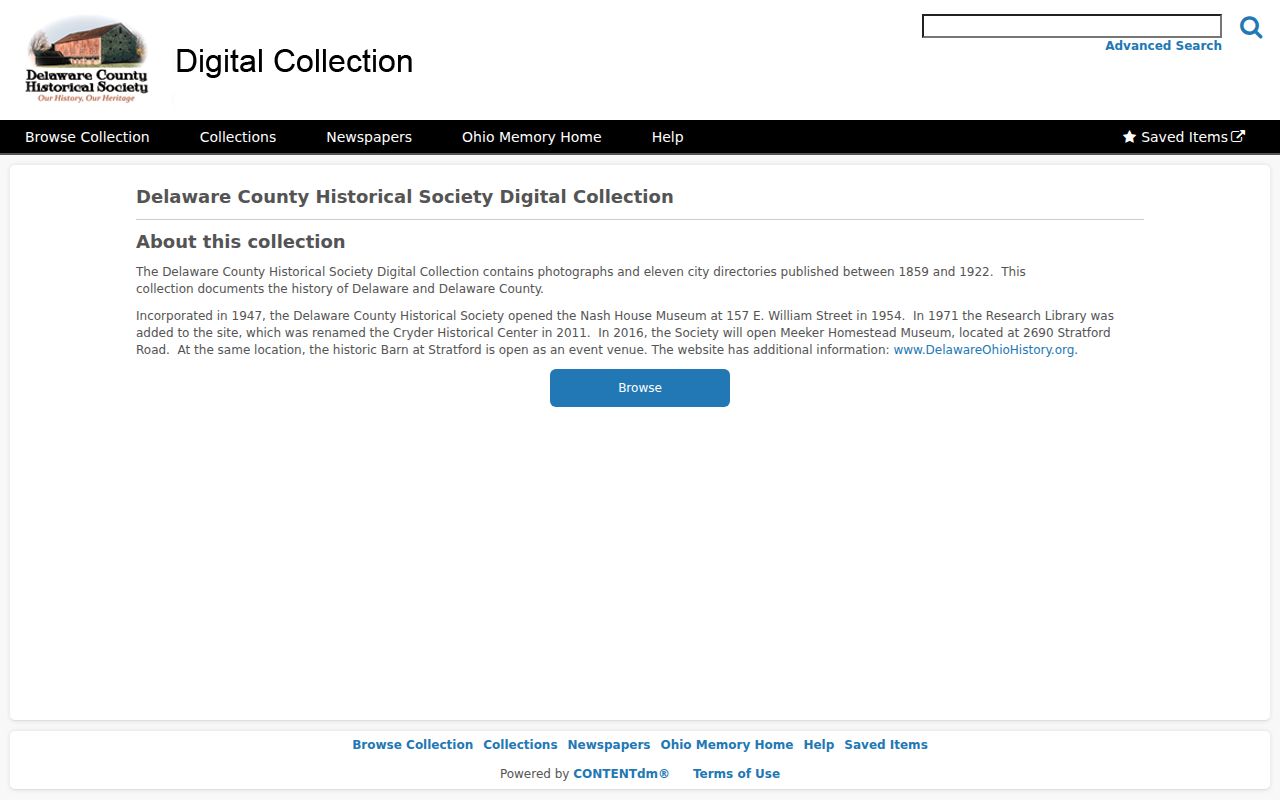
Use the item-level scan for a citation, then read the title and page range before treating a name as a City listing.
For example, the 1890-92 Postal Tablet includes a county inhabitants and addresses section. The 1893-94 R. L. Polk book separates its city pages from county residences, and the 1899 Wiggins' volume places county taxpayers after the city and classified material. Those labels prevent a county entry from being mistaken for a City household.
Delaware Historic Street Guides
Several Delaware city directories offer more than an alphabetical name list. The 1901 Danford & McCuskey volume includes a Street & Number section on pages 101-123. Baker's 1905-06 directory puts its Street Guide and Householders on pages 177-208, while its alphabetical city directory occupies pages 17-146. The 1908-09 Baker's book reverses that order, with Street Guide and Householders on pages 15-45 and city entries on pages 47-206.
The 1922 Townsley directory continues that useful pattern: its Street Guide and Householders are on pages 15-54, followed by city entries on pages 55-160. These sections are dated historical evidence, not a current address list. They are especially helpful when a street and house number are known, but a historic number should be checked against a map, parcel description, and the matching alphabetical entry before a conclusion is drawn.
Reading a Delaware City Directory Entry
A Delaware city directory entry is best read as a small piece of dated evidence. The exact abbreviations and wording belong to the particular scan, so they should be copied only after inspecting the volume. The 1905-06 Baker's layout gives a practical cross-check: start with street, number, and householder in the Street Guide and Householders section, then look for the surname and address in the alphabetical city section. That confirms how the volume itself organized the information.
| Name | The printed surname and given-name form used in that volume. |
|---|---|
| Address | A street and number in the dated city or street-guide section. |
| Householder | The person named beside a street number in a householder listing. |
| Section label | Whether the evidence comes from City, County, classified, guide, or taxpayer material. |
| Page citation | The page in the scanned volume needed to verify the statement later. |
- Street guide
- A directory section arranged by street and number rather than surname.
- Householder listing
- A street-based listing that pairs an address number with the printed household name.
- Alphabetical city entry
- A name-first entry used to cross-check an address found in the street guide.
- Abbreviation key
- The volume’s own explanation of its shortened labels, which should be checked before interpreting a mark.
Delaware Historical Research Desks
The Delaware County District Library Local History Room is at 84 E. Winter Street and lists historical city and county directories, atlases, Sanborn material, local census microfilm and indexes, church histories, yearbooks, and Delaware Gazette microfilm from 1821-current. Its phone is 740-362-3861. The Delaware County Historical Society Research Library, at 157 E. William Street, reports county newspapers, books, maps and atlases, yearbooks, and personal archives. Its phone is 740-369-3831.
The Historical Society’s research-library route complements the digitized directory scans with related collections.
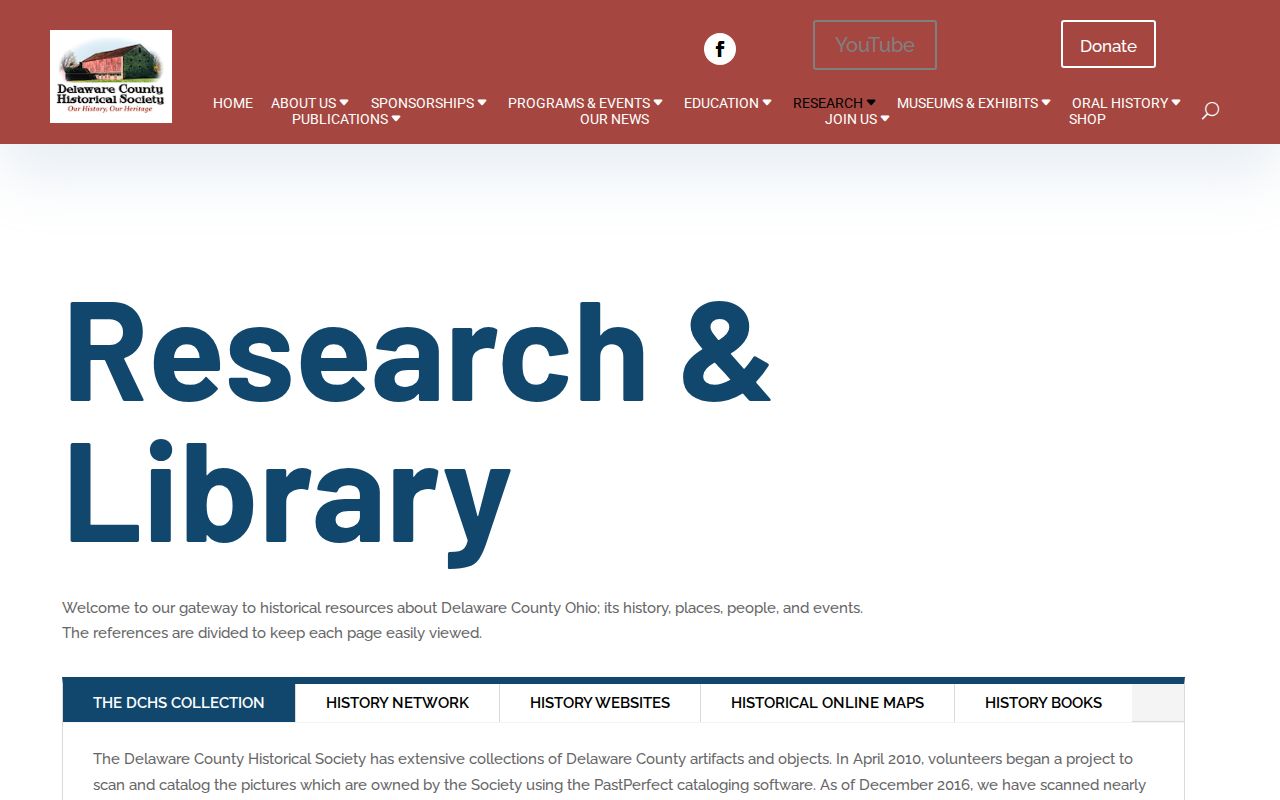
Give the staff a collection title, volume year, known name or address, and narrow date range when asking whether a volume or a scan can be consulted.
Some resources may be library-use only or may have current access conditions. Recheck directly before a visit. The Records Center is another archival route for older county series, but it is not a substitute for the library or historical society’s directory and newspaper holdings.
Tracing Delaware City Directories by Year
A household trail should move through the directory sequence one dated volume at a time. A first appearance is not proof of arrival, and a later disappearance is not proof of death or a move. It may reflect a gap in the run, a changed spelling, a county section, or a listing choice. Pairing the directory with a census year, newspaper issue, map, or legal record preserves those limits while still building a useful family-history timeline.
- Choose the earliest available Delaware volume likely to contain the surname, then record the volume date, section, and page.
- Check the next available volume for the same printed name and compare its address or street-guide reference.
- When an address appears, cross-check the alphabetical city entry against the street guide or householder pages in the same book.
- Place the dated directory observations beside the appropriate federal census period, without treating either source as continuous proof.
- Use newspapers, maps, cemetery material, or a custodian-held record only to test a specific dated question, and retain contradictions.
For a modern record check after a historical match, use the official record type that fits the question rather than extending a directory entry into a present-tense claim. The Delaware resident lookup route keeps that verification work separate from the historical shelf.
City and County Pages in Delaware Volumes
Many books in the Delaware sequence intentionally include both City and county material. That is helpful for a broad search, but it creates a basic reading rule: preserve the section title and page range with every note. The 1897 City and County volume has city pages, classified material, and county pages in separate ranges. The 1901 volume includes city, Street & Number, classified, and county taxpayer sections. A taxpayer list does not establish occupancy.
Delaware County began documented operations in 1808, and the City was platted in 1808. Those dates explain why local records span different custodians and formats, not why any particular person should appear in a directory. Historic addresses can change form, roads can extend, and no official City-wide historical renumbering or renaming table was located. Leave a conflict unresolved until the directory, map, parcel, and legal-record evidence agree.
Delaware Cemetery Records Context
A dated directory entry can be compared with a historical burial record when the research concerns a deceased person, but the two sources do different work. The City’s Oak Grove burial search provides name, dates, section, lot, grave, funeral-home, and place-of-death fields. Oak Grove was established in 1851. Those fields can help place a memorial record in local history; they cannot establish a former street address, living relatives, or a current household.
Keep the directory citation and burial result separately dated. A surname match is only a research lead until the published directory page, cemetery record, and other dated sources support the same identity. This approach is especially important where the historic directory uses initials, an older spelling, or a City-versus-county section that could refer to more than one person.
Delaware Directory Record Timeline
The surviving digitized sequence has clear checkpoints. It starts with an 1859-60 first issue, develops street and city sections in later nineteenth-century volumes, and has especially useful street-and-householder arrangements in the early twentieth century. The timeline below marks available published evidence, not continuous publication or continuous residence.
| 1859-60 | Williams' is identified as the first issue in the DCHS digital collection. |
|---|---|
| 1901 | Danford & McCuskey includes Street & Number pages 101-123. |
| 1905-06 | Baker's pairs city pages 17-146 with Street Guide and Householders pages 177-208. |
| 1908-09 | Baker's places Street Guide and Householders before the alphabetical city pages. |
| 1922 | Gardner H. Townsley is the latest located digitized City directory. |
Every citation should retain the volume and page. That simple practice distinguishes a useful historical directory trail from an unsupported claim about a present household.